Real houses. Real measurements. Practical answers.

Bathroom Fans Are Simple — Until You Actually Install One.

BathExhaust helps you choose, install, duct, troubleshoot, and get real performance from a bathroom exhaust fan using lessons from actual homes and installations.

The fan is only part of the system. We’ll help you understand the rest.

Choose an Installation Guide →
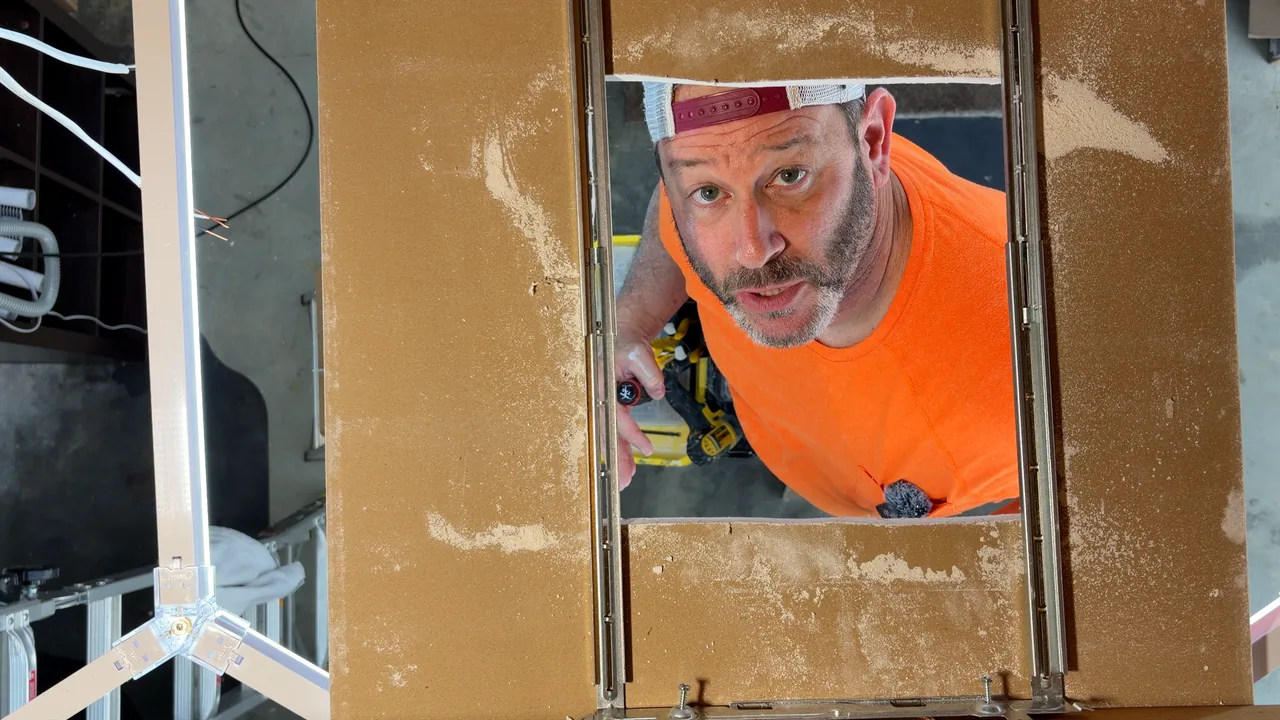
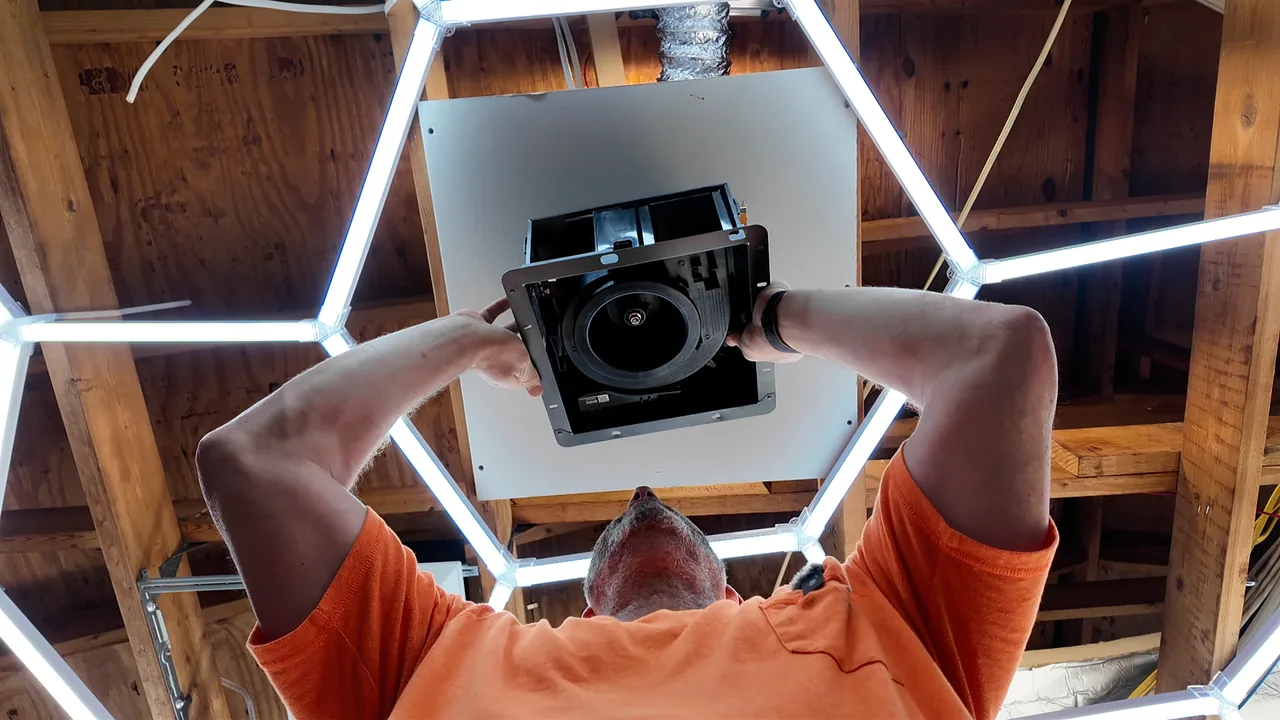
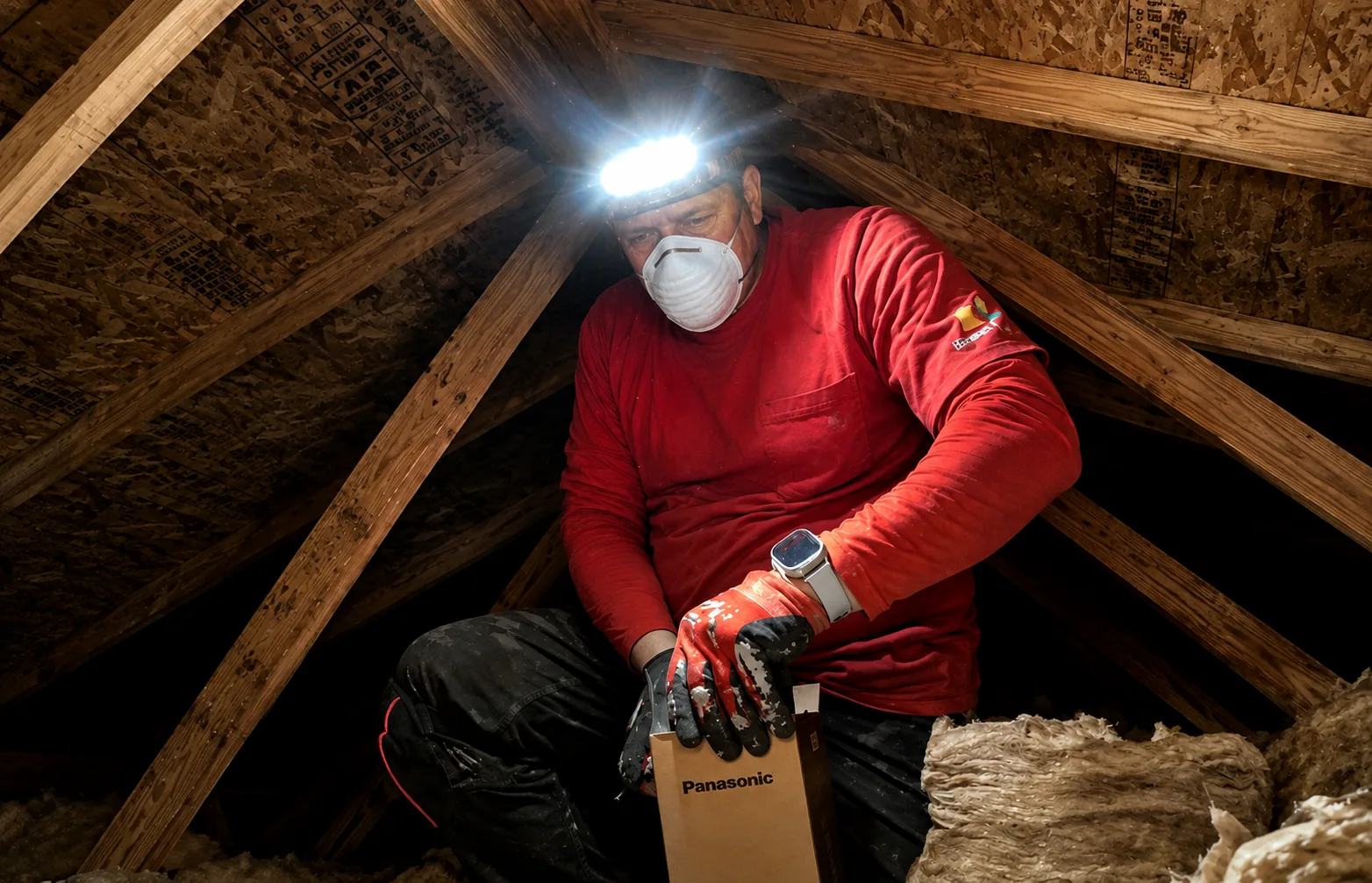
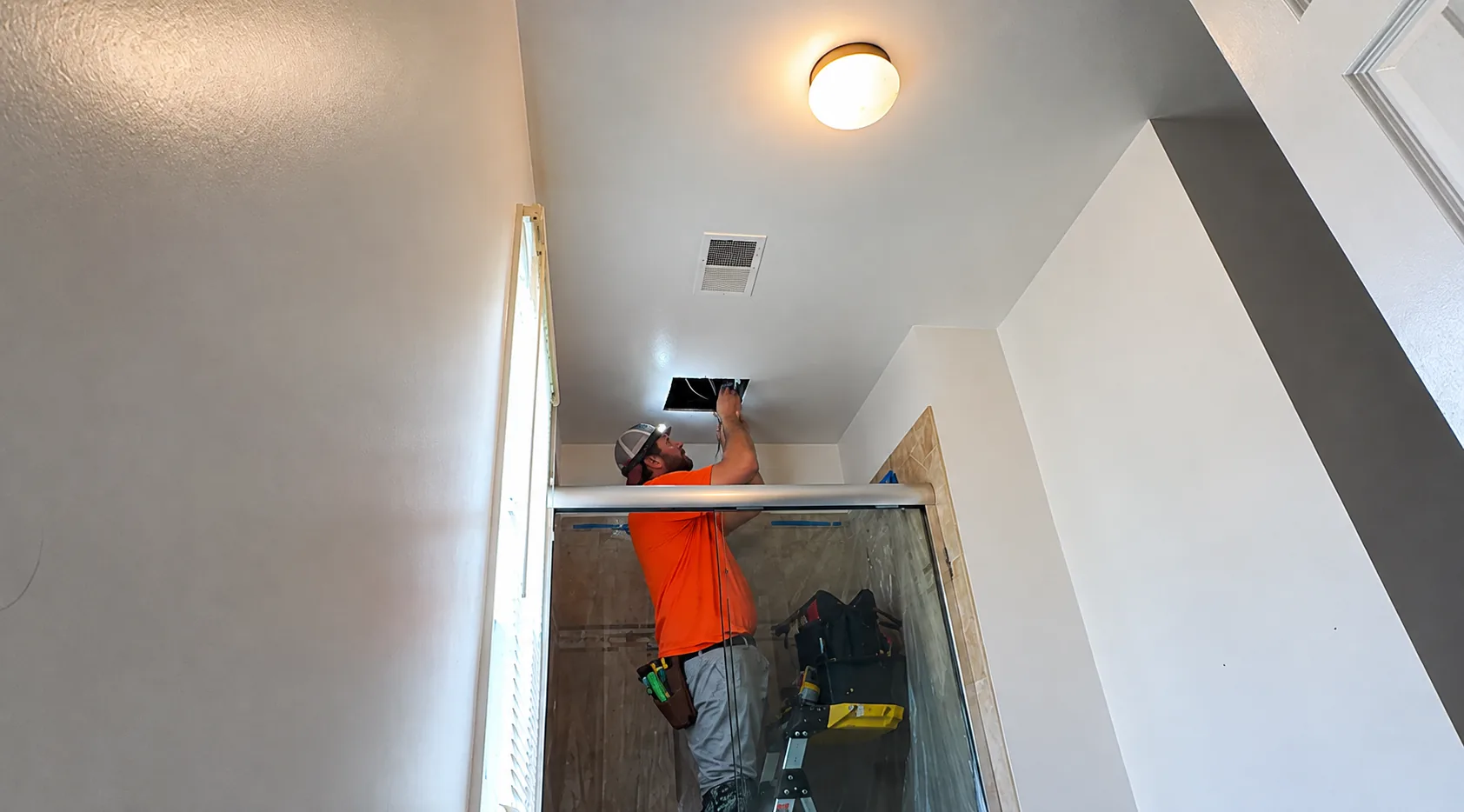
Eric Gans working with a bathroom exhaust fan during a field installation

100+Panasonic fan installations

2,000+Home-performance inspections

Since 2006Working as a contractor

MeasuredIn real homes

Start with your problem

What Are You Trying to Figure Out?

You do not need to become a ventilation expert. Start with the question that brought you here.

Field proof

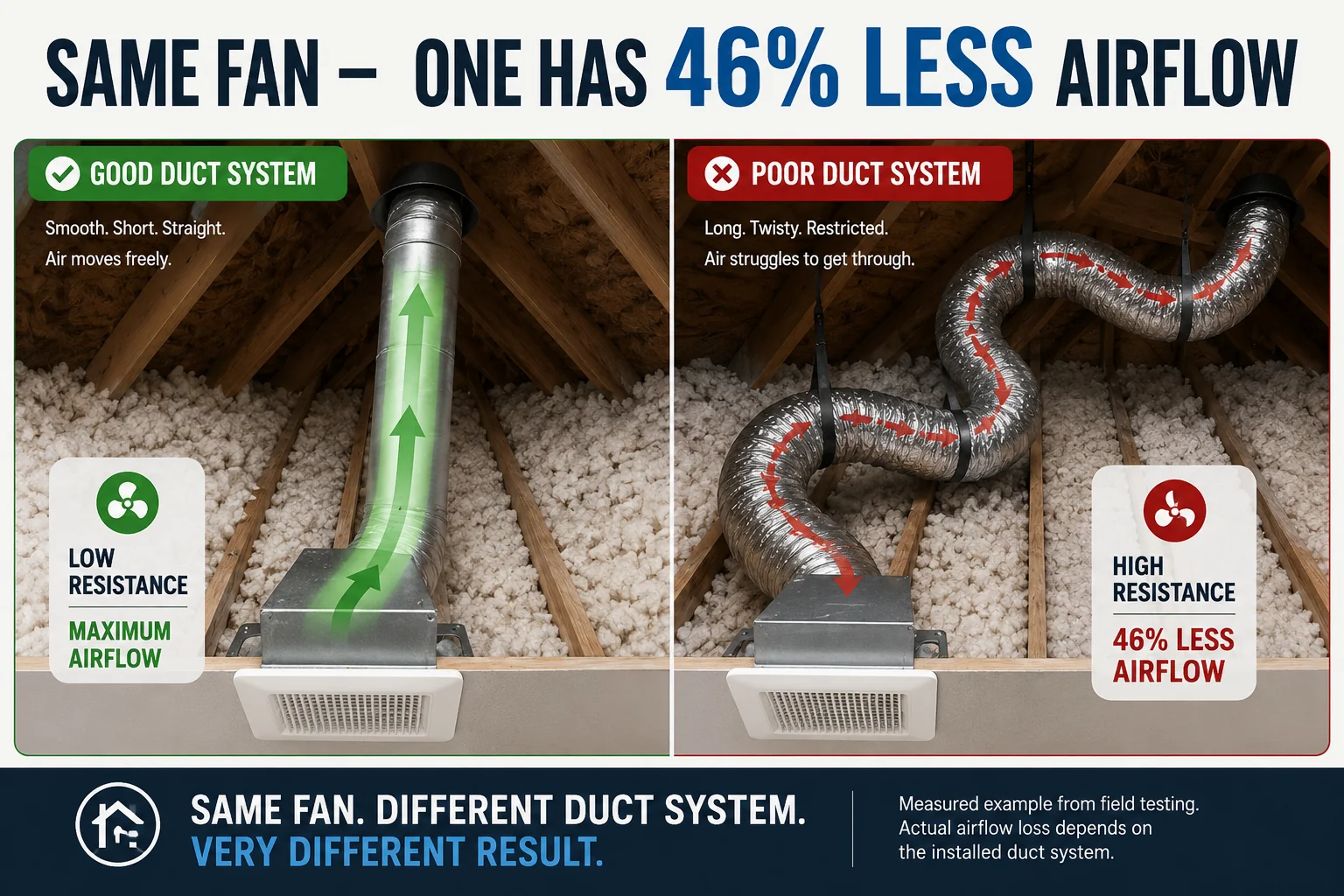
Same Type of Fan. Very Different Airflow.

Two comparable bathroom fans in the same house delivered dramatically different measured airflow. The duct systems were very different, and so was the measured airflow.

76CFM measured
versus
52CFM measured

Rated airflow is not necessarily installed airflow.

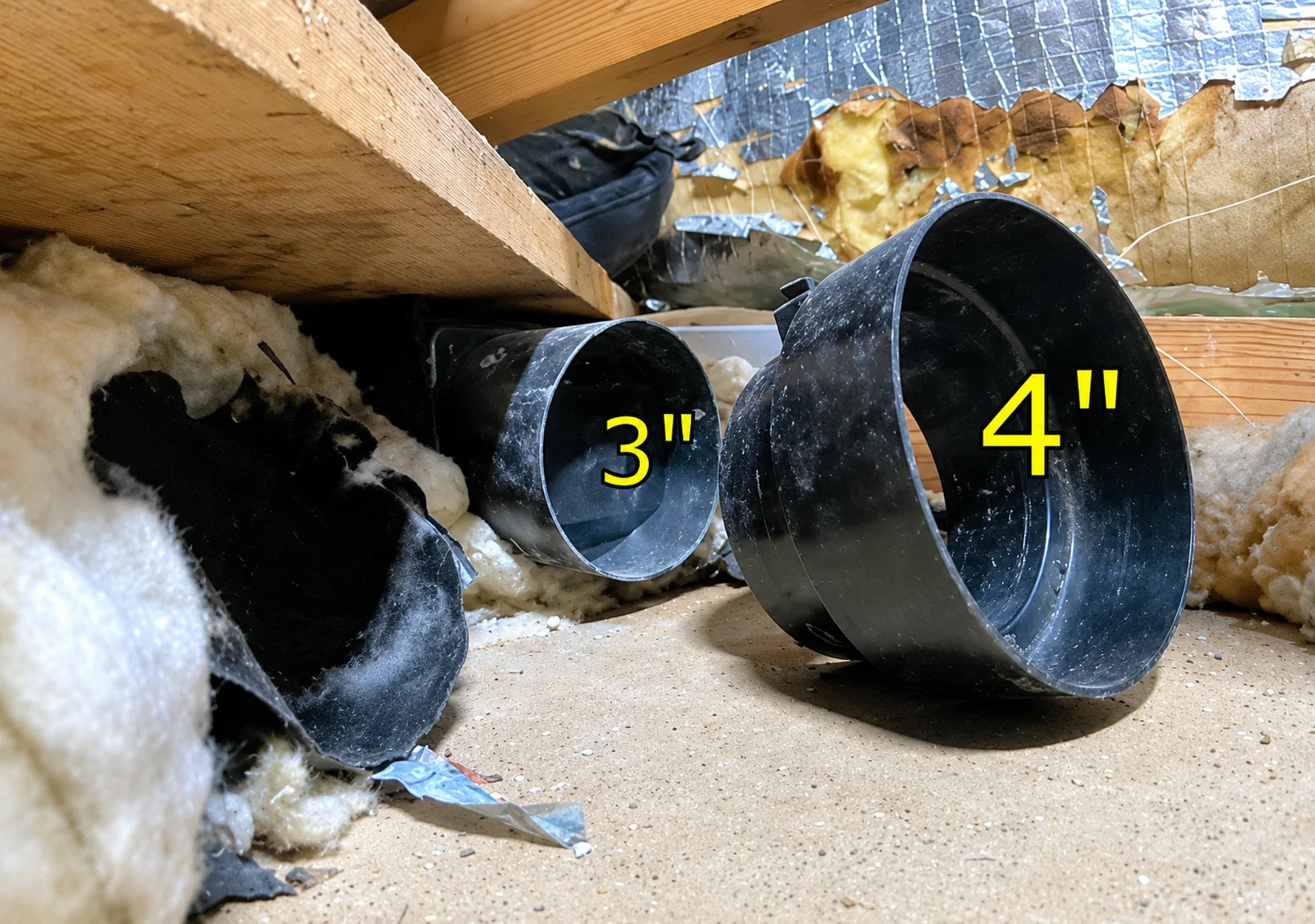
The installation included 4-inch fan outlets reduced to 3-inch duct, excessive flexible duct, long routing, and shared exhaust routing. Those field conditions matter. They do not justify inventing one precise cause, but they do show why the complete installed path must be inspected.

“The shortest, tightest run is going to make it work so much better.”
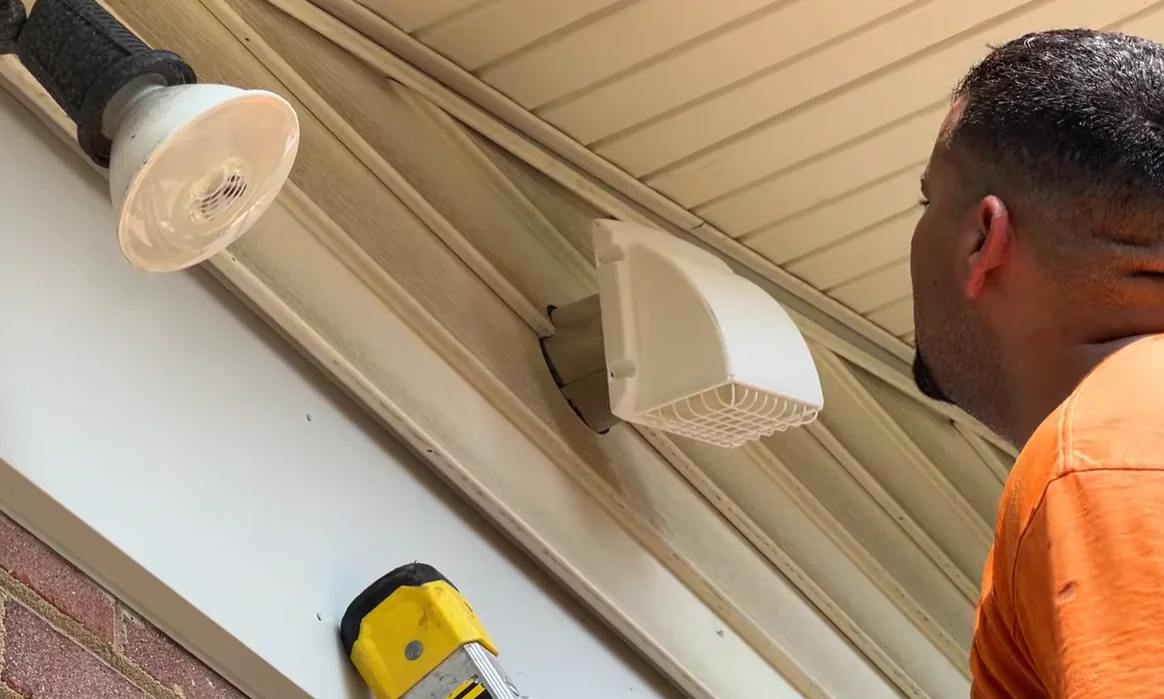
See Why Bathroom Fan Ducting Matters
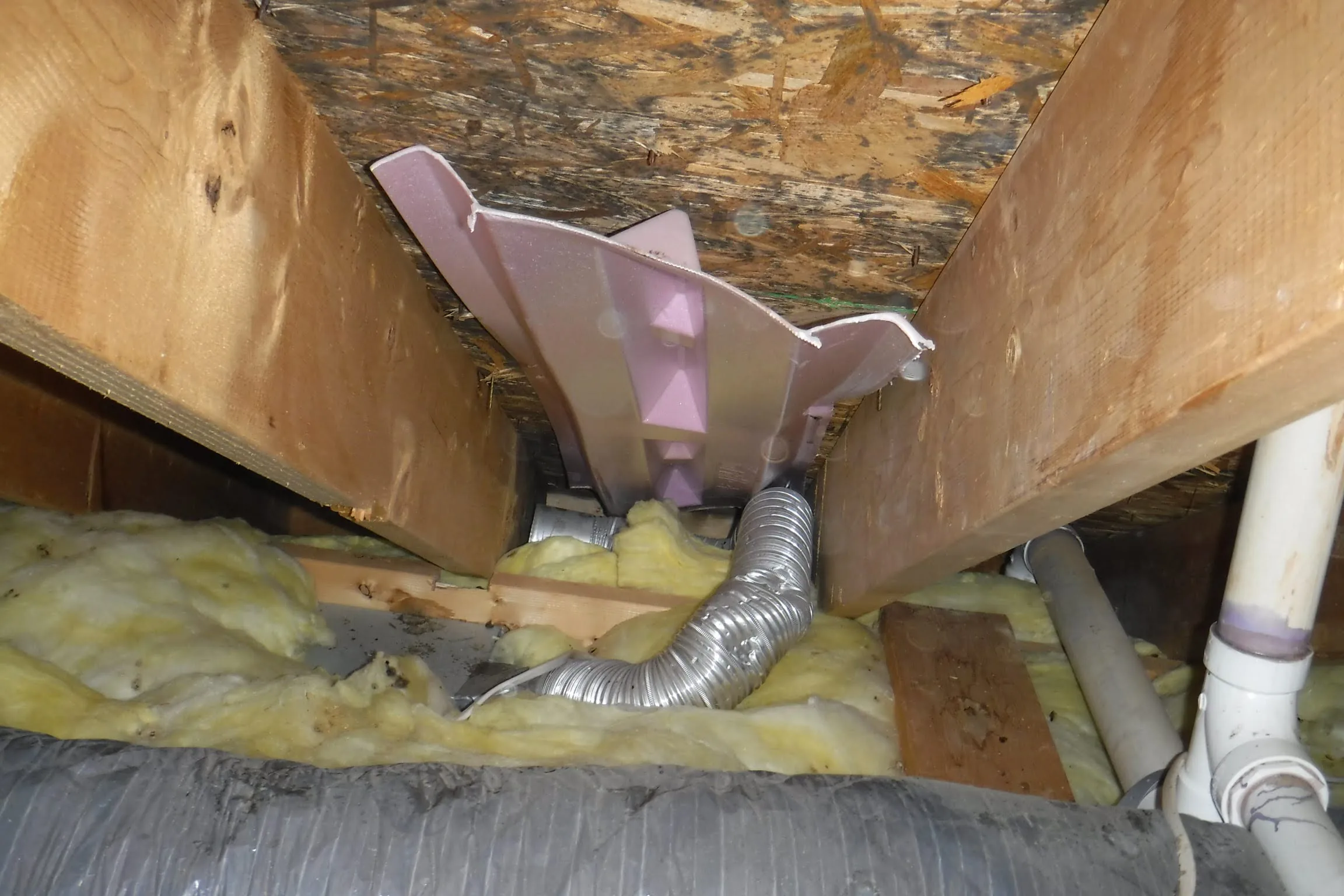
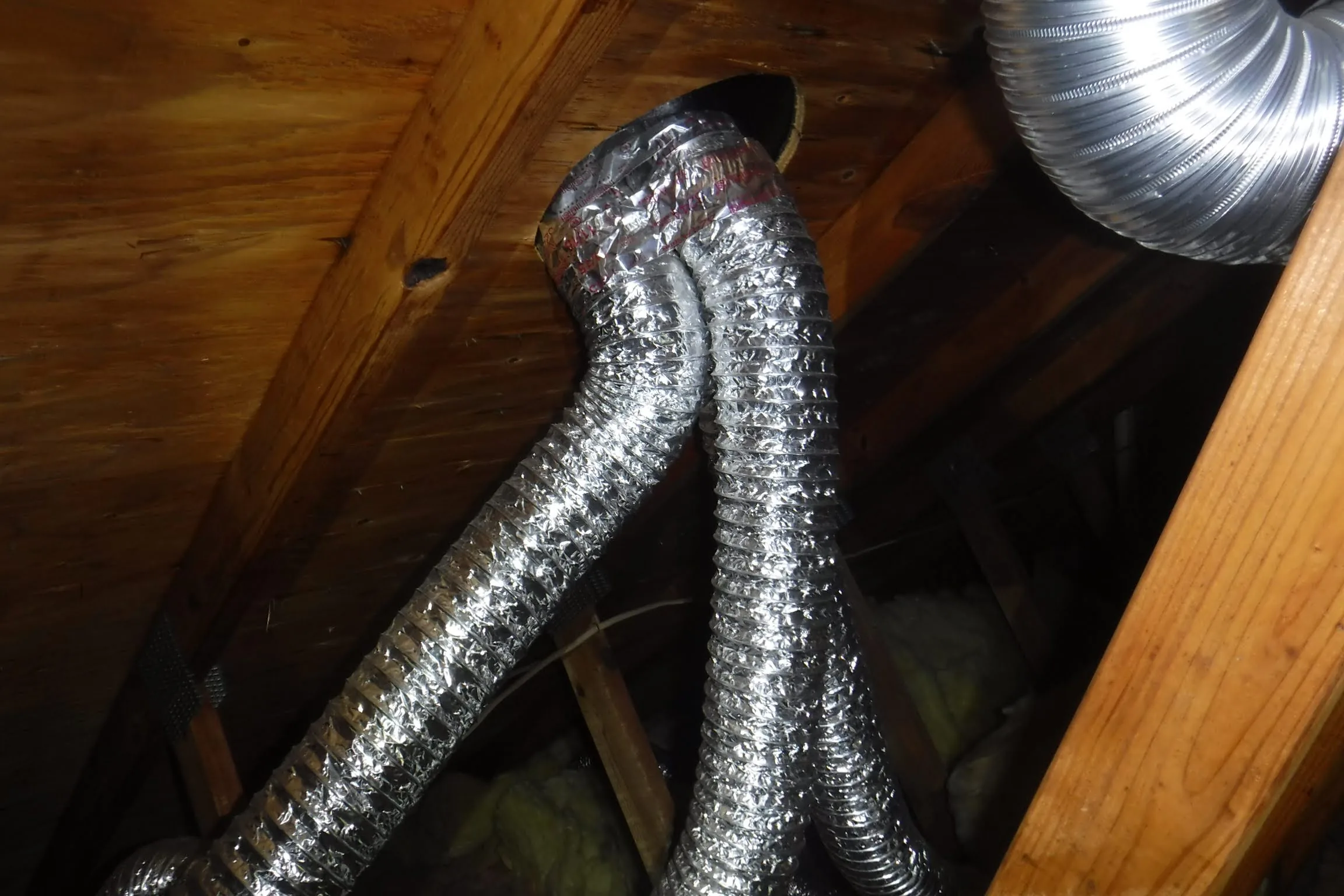
Three bathroom exhaust duct terminations routed through one opening
Field condition associated with the 76 CFM side of the comparison
Crumpled and crushed bathroom exhaust duct restricting the airflow path
Restricted duct condition associated with the 52 CFM side of the comparison
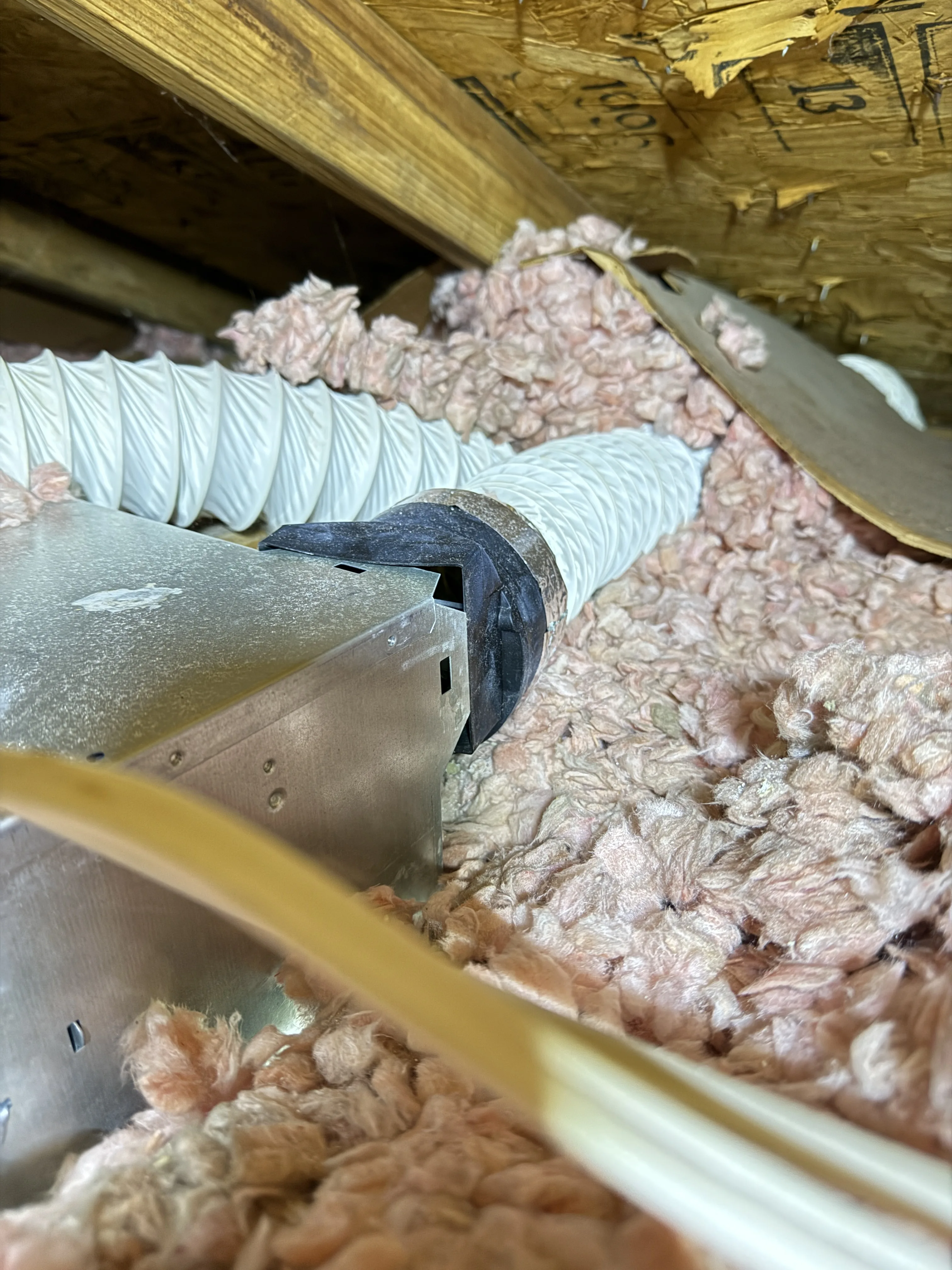
Bathroom fan outlet reduced from four-inch to three-inch duct
4-inch fan outlet reduced to 3-inch duct
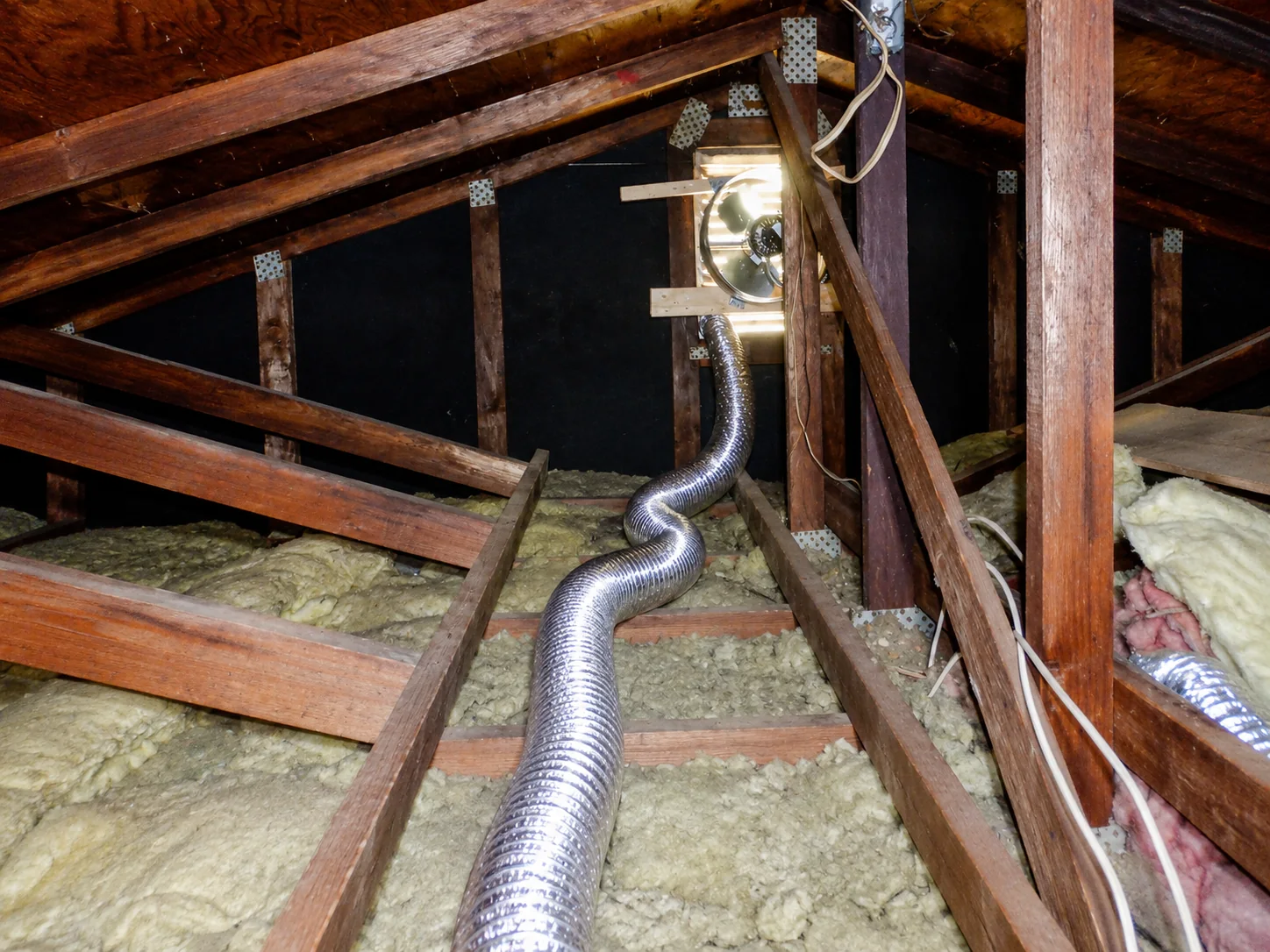
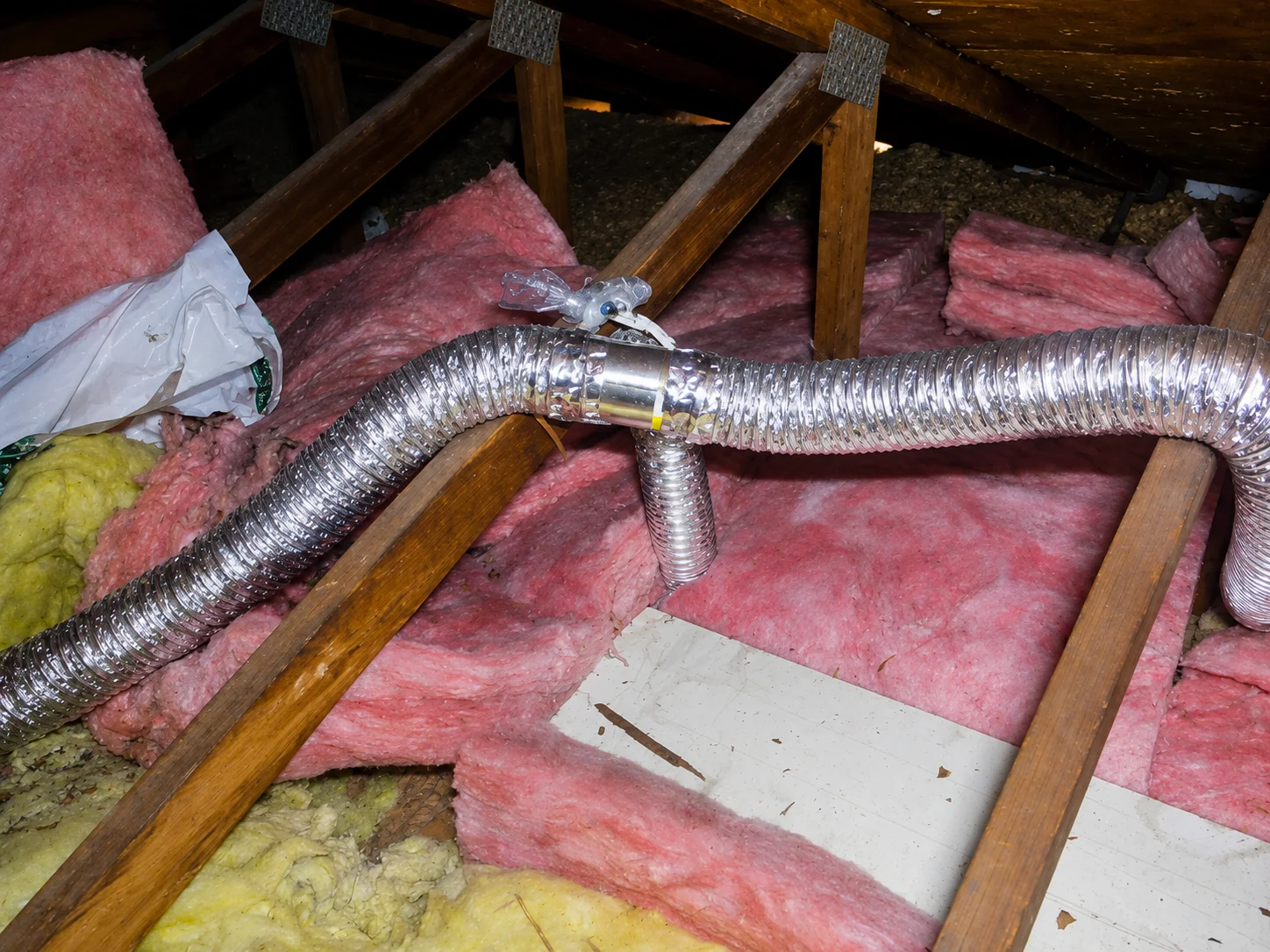
Long, sagging flexible bathroom fan duct found in an attic
Long, loose flex creates a much harder path

Follow the whole path

A Running Fan Doesn’t Prove the Moisture Is Leaving the House.

I have repeatedly found fans that turned on normally while the exhaust system had failed somewhere above the ceiling.

  1. Bathroom
  2. Fan
  3. Duct
  4. Exterior termination
  5. Outside

Follow the air all the way outside.

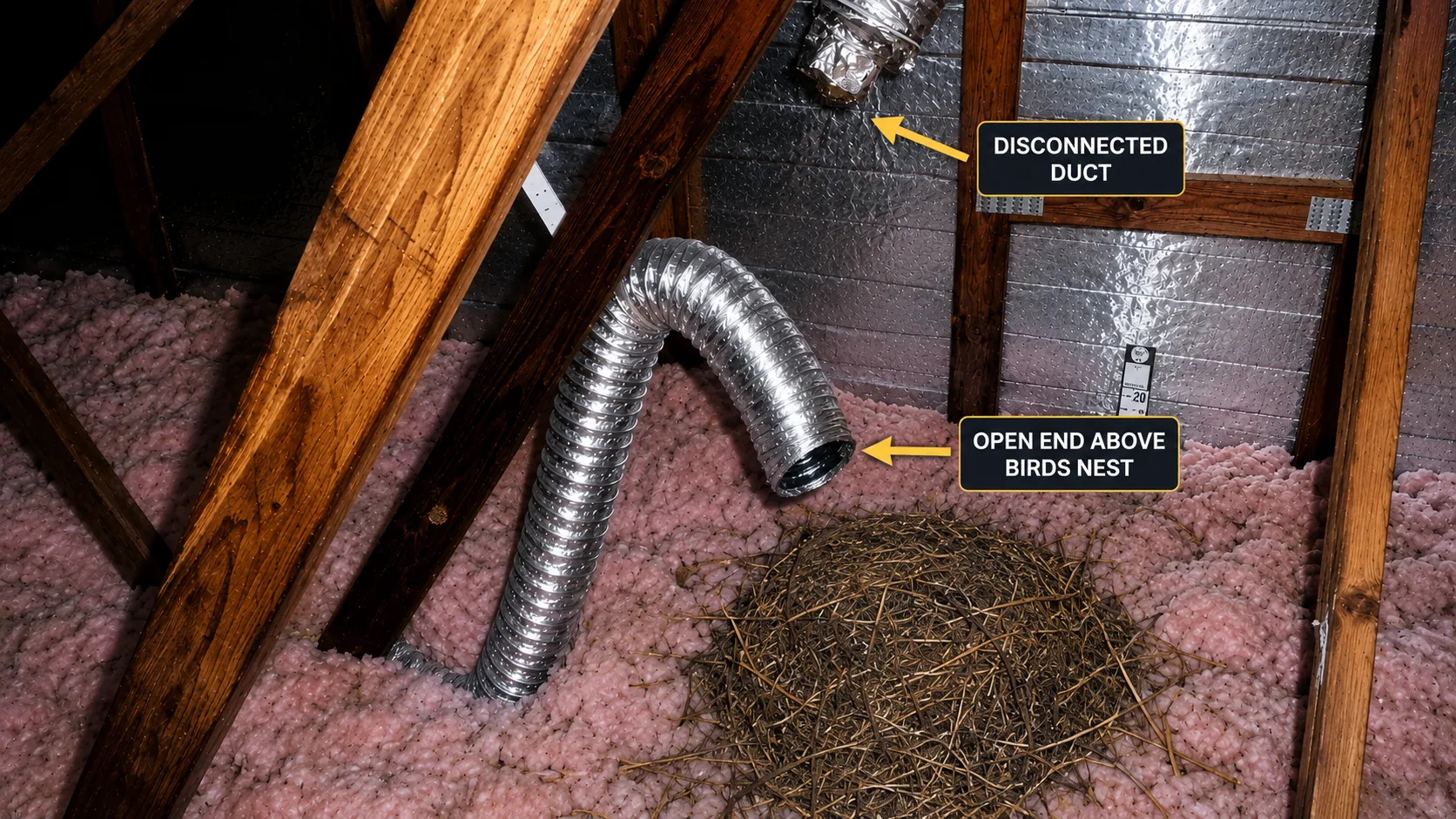
WrongDisconnected bathroom exhaust fan duct found in an attic

The fan can run while shower moisture spills into the attic.

WrongBathroom fan duct incorrectly aimed toward a gable attic vent

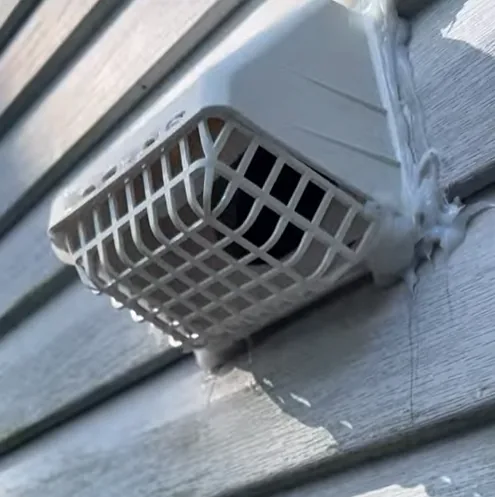
Aiming a duct toward an attic vent is not a dedicated exterior termination.

RightBathroom exhaust duct connected to a dedicated gable-wall exterior terminal

A dedicated exterior termination gives the air a complete path outdoors.

Short field investigations

Real Problems. Real Houses.

These are the kinds of conditions I look for before deciding that the fan itself needs to be replaced.

Disconnected bathroom exhaust fan duct found during an attic inspection

The fan they thought was too small

The duct was disconnected.

The bathroom stayed humid and the existing fan seemed undersized. In the attic, the exhaust path was disconnected.

Before buying a bigger fan, make sure the existing fan actually has a path outside.
Recently replaced bathroom exhaust fan with an unfinished attic duct connection

The new fan that wasn’t finished

New did not mean correct.

The fan had recently been replaced, but one duct was disconnected and another bathroom exhaust ended in the attic.

Replacing the box at the ceiling does not finish the exhaust system.
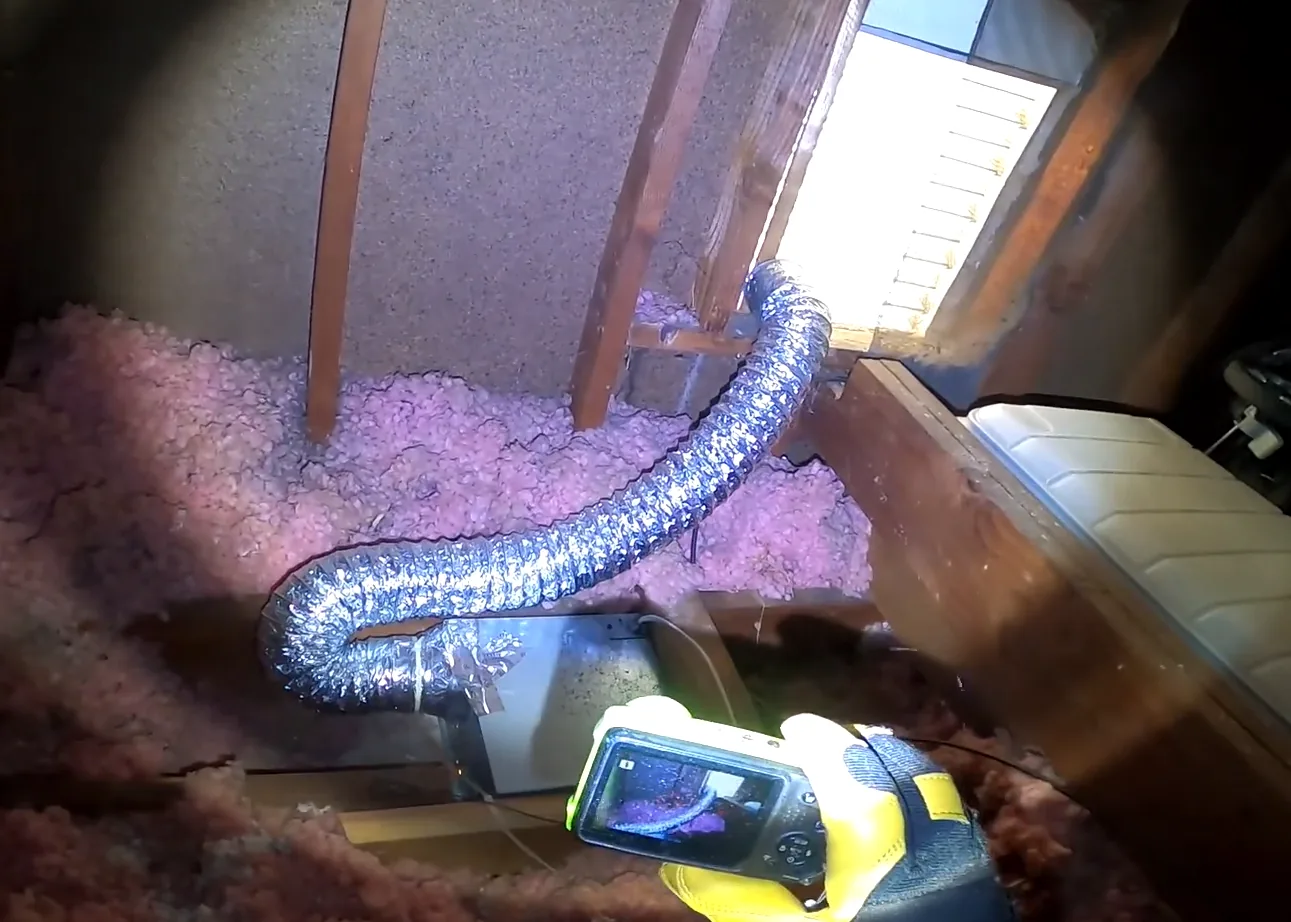
Bathroom exhaust ducts joined through a Y-connector in an attic

The loud fan

The duct needed attention first.

Loose or poorly supported flex can add turbulence, vibration, and resistance.

Diagnose the duct before blaming the motor.
Nesting debris discovered inside a compromised bathroom exhaust duct

The pterodactyl

Nesting debris compromised the exhaust path.

“There’s a pterodactyl living in this one.”
You don't know what the system is doing until you inspect the entire path.
One connected system

The Fan Is Only Part of the System.

A bathroom fan can only move the air the installed system allows it to move. Duct diameter, length, turns, flex compression, exterior termination, and damper resistance all matter.

  1. 1Bathroom air
  2. 2Fan
  3. 3Correct-sized duct
  4. 4Minimal bends and a supported run
  5. 5Exterior termination
  6. 6Damper opens freely
  7. 7Moisture reaches outdoors

The whole path matters.

Test and verify

Don’t Just Listen to the Fan. Measure It.

A quiet fan can still underperform. A loud fan may not move enough air. A fan rated for one airflow can deliver something different after it is connected to the actual house.

I have measured examples around 76 versus 52 CFM, approximately 53 CFM on another installed fan, and approximately 104 CFM during ventilation commissioning. The measurement tells us what the installed system is actually doing.

Troubleshoot Weak Airflow
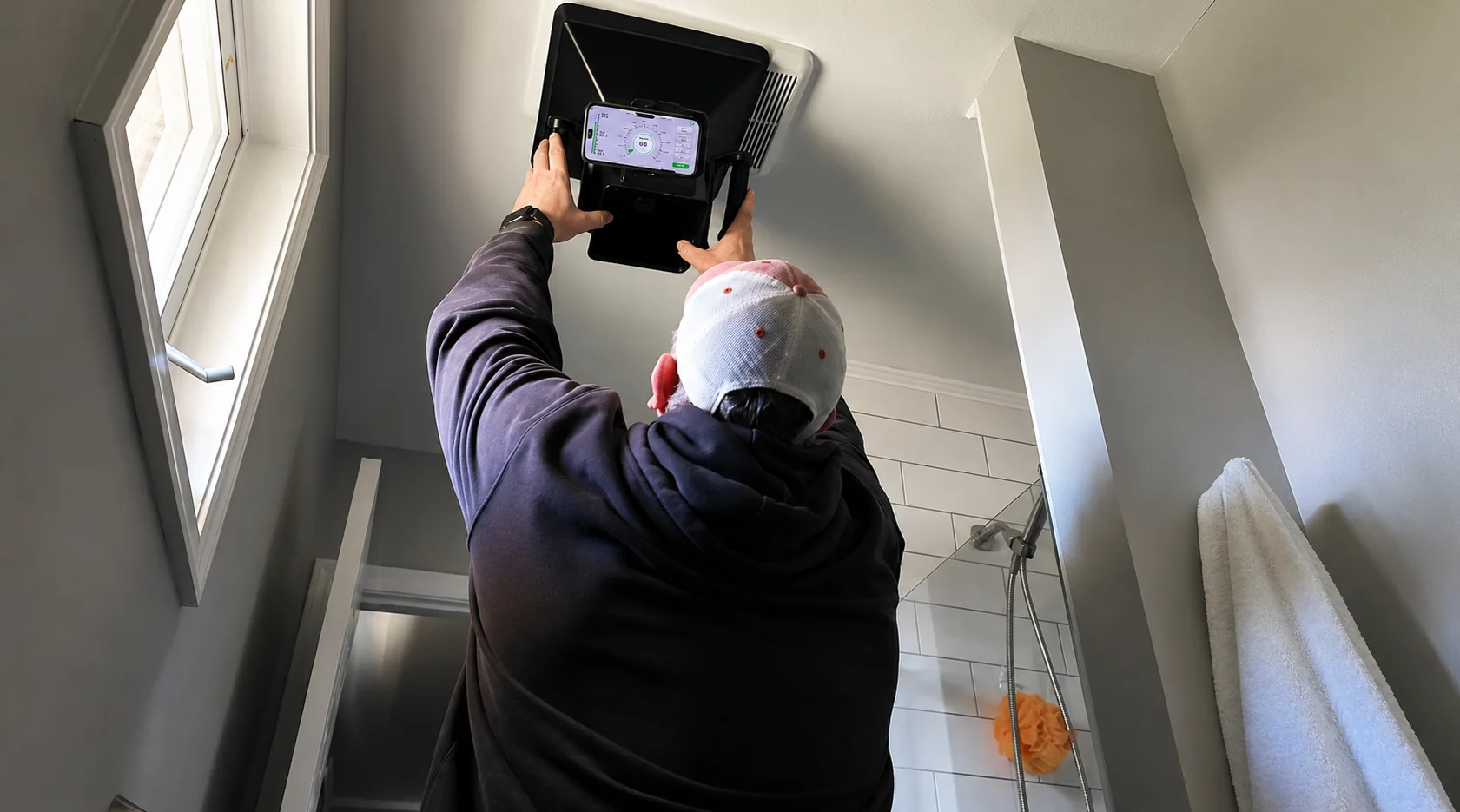
Airflow hood measuring the installed performance of a bathroom exhaust fan
Measure installed airflow instead of assuming the fan’s rating reaches the grille.

Model-specific experience

Panasonic Fans — Tested in the Real World.

I have installed more than 100 Panasonic bathroom fans. BathExhaust turns that field experience into detailed, model-specific help without making the product the whole story.

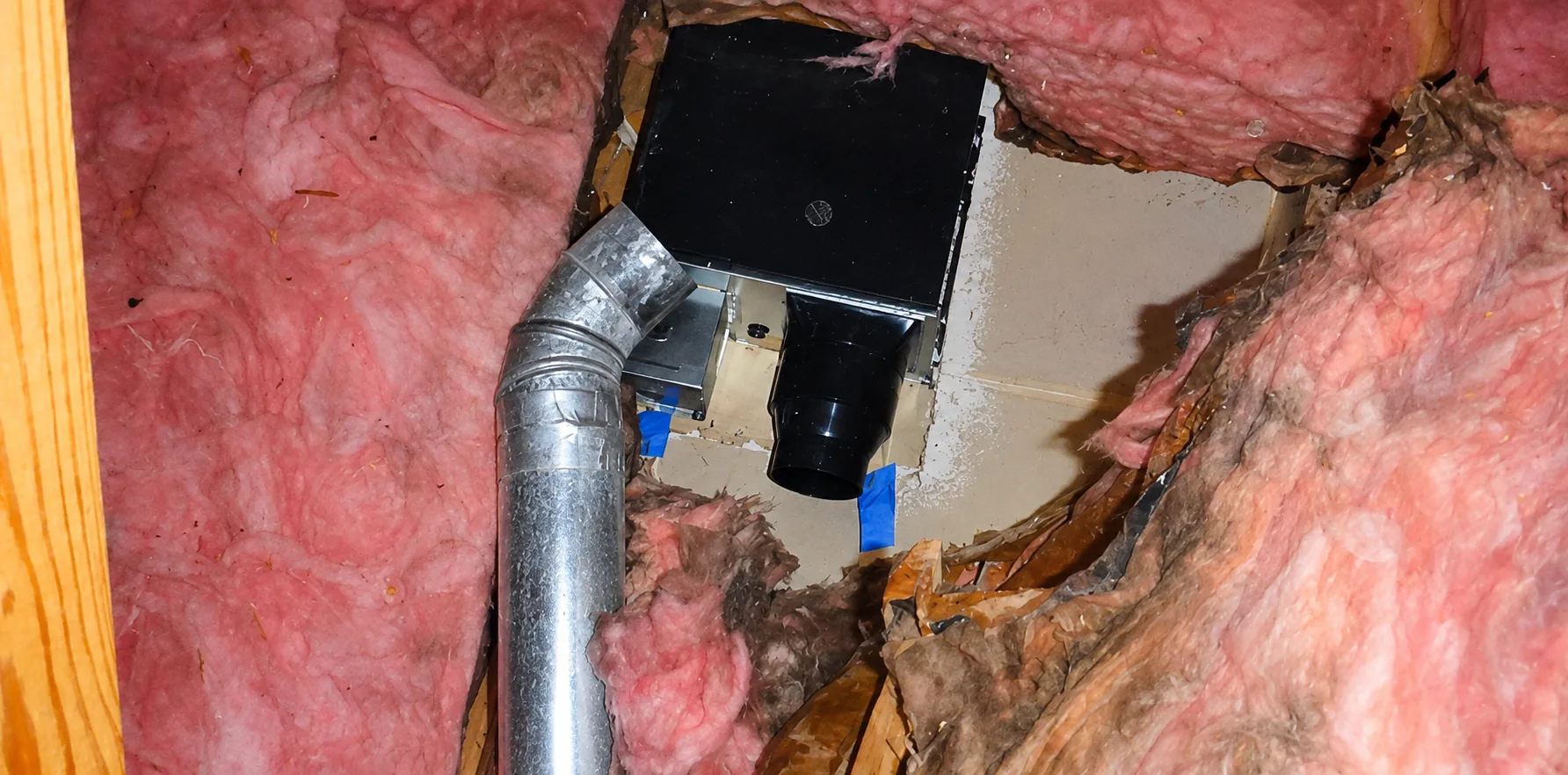
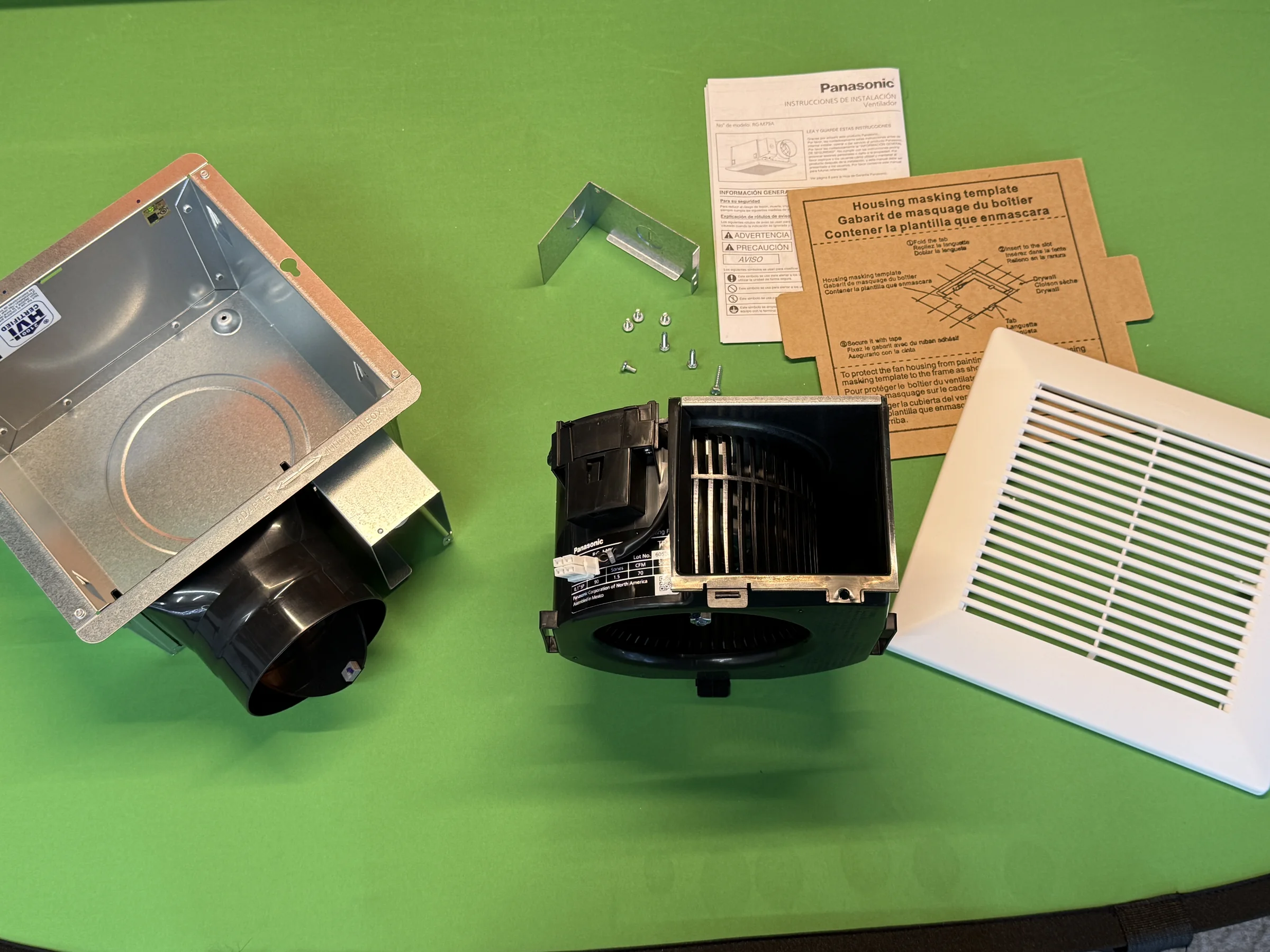
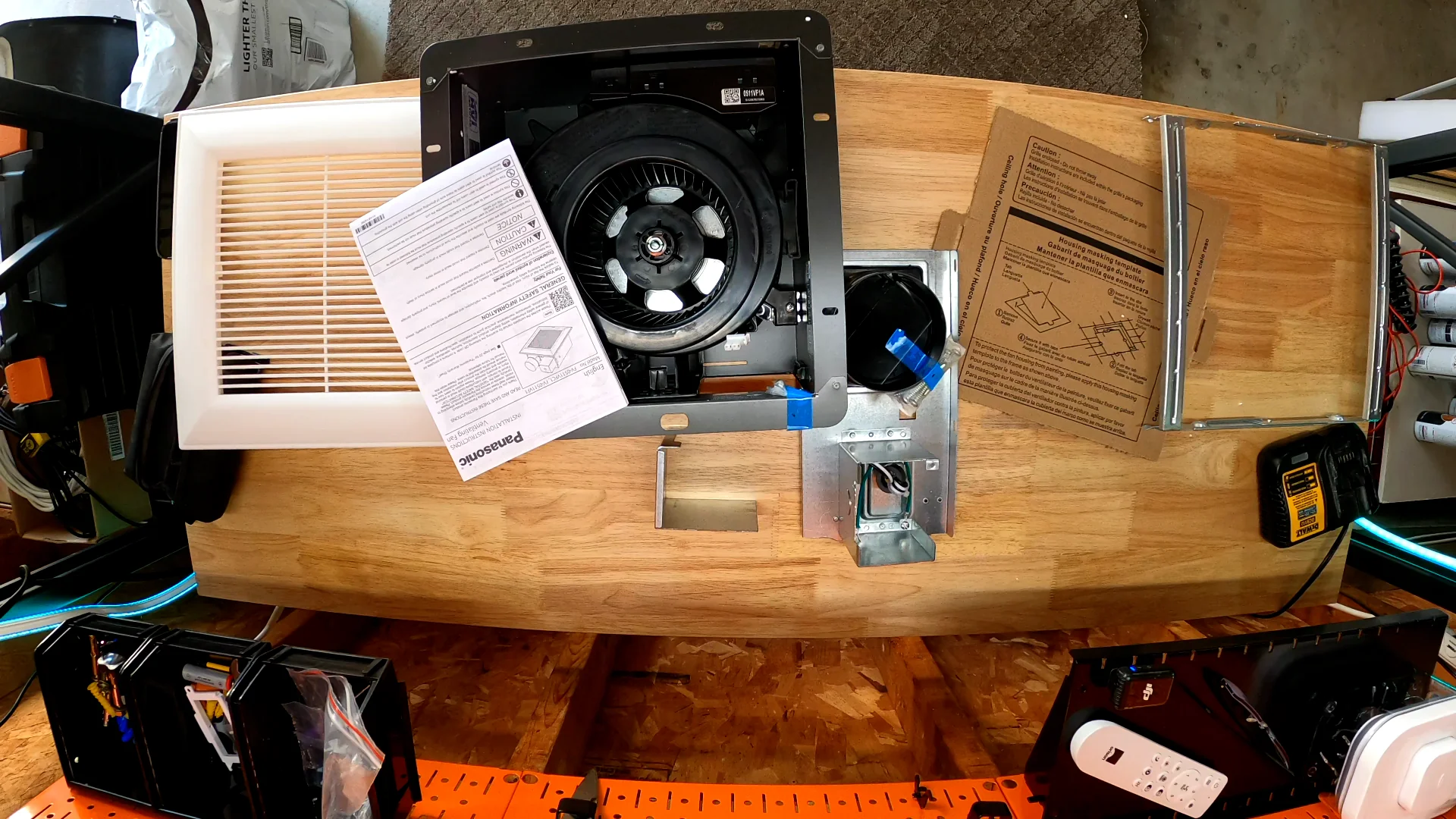
Panasonic Whisper Mighty RG-M79A housing, motor, grille, hardware, and instructions

Installation available

Panasonic Whisper Mighty RG-M79A

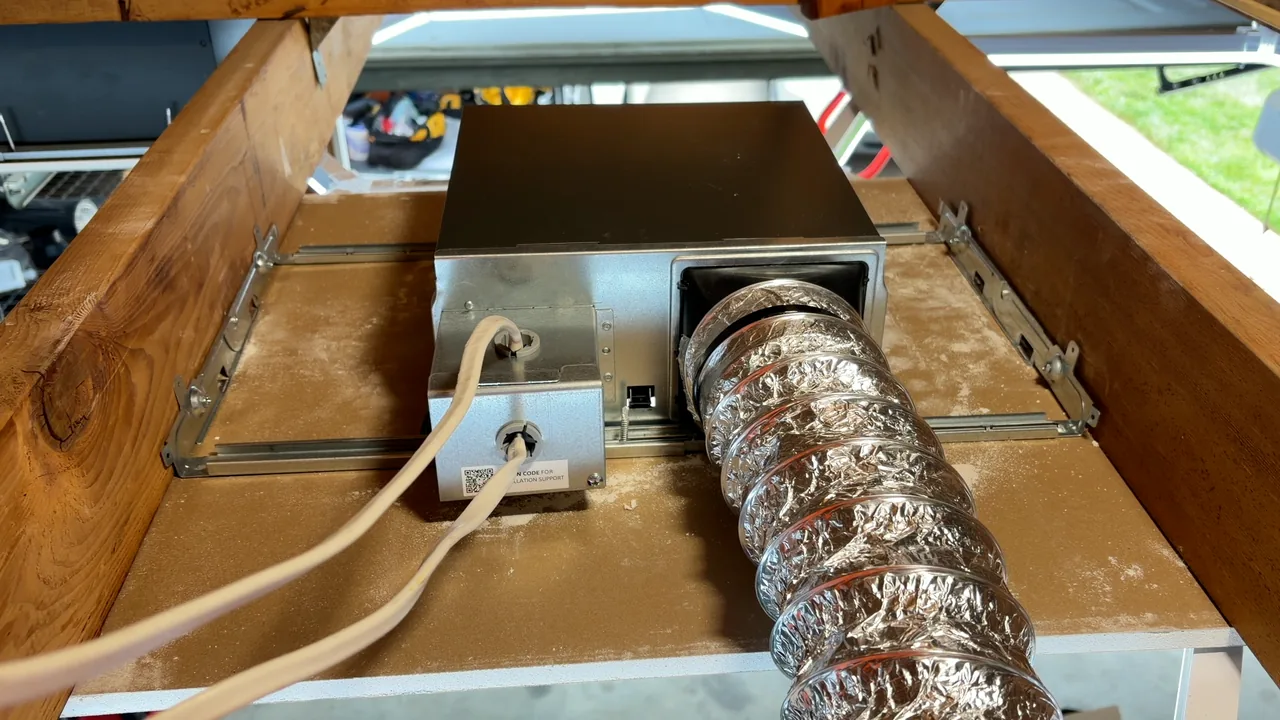
A compact Panasonic retrofit fan with a very different installation system than the WhisperFit. See how the housing, 3-inch / 4-inch duct adapter, wiring, and 70/90 CFM setup come together from below the ceiling.

Why BathExhaust exists

Real Houses Add the Part the Manual Leaves Out.

Product pages tell you what a bathroom fan is rated to do. Installation manuals show how the installation is supposed to go.

Real houses add joists, plumbing, old wiring, thick ceilings, undersized duct, crushed flex, inaccessible attics, bad terminations, and plenty of surprises.

BathExhaust covers that part.

The information here comes from real fan installations, energy audits, attic inspections, airflow measurements, and troubleshooting in actual homes.

  • Contractor since 2006
  • 2,000+ home-performance inspections
  • 100+ Panasonic fan installations
About the field methodology →
Eric Gans working in an attic during a field inspection